The non-negotiables of a future-ready talent strategy

After years leading global talent programs across complex, fast‑changing environments, I’ve learned that building a future‑ready workforce isn’t about predicting what’s next, though it’s nice when we guess right! It’s about preparing people and systems to adapt to whatever comes.

These are the non‑negotiables I come back to again and again:

Create scalable solutions: Future‑ready organizations don’t rely on high-touch, boutique programs for small groups. They build talent systems that scale and can reach thousands more quickly- in the flow of how they already work. Leadership development and repeatable routines that reach every leader, coaching that’s accessible to all, and processes that flex across geographies can deliver value further, faster. Scalability is what turns good ideas into true enterprise impact.

Build learning agility: The most important capability today is the ability to learn, quickly apply new knowledge in ambiguous situations, and adapt. When leaders model curiosity, teams follow. When organizations reward experimentation and a willingness to figure things out, innovation grows. At the same time, while I believe all problems are solvable- it’s important to know when you’ve invested more effort than the value you’re getting out. Enough monkeys and typewriters could eventually get us Shakespeare, but if we can find a good playwright instead that’s a much quicker path forward.

Connect across boundaries: High‑performing talent ecosystems are built through partnership and strategic alignment. Business leaders, HR, COEs, and data teams, across business groups, geographies, and backgrounds, create the best outcomes. Silos can speed up individual teams but slow organizations down. Connection speeds the whole organization up, and helps create resilience as well.

Stay flexible: Markets shift. Technology accelerates. New models drop. Workforce expectations evolve. Talent leaders must stay flexible enough to adjust direction without losing momentum. It’s helpful to build flexibility into your frameworks so you can make shifts more easily while maintaining stability in experience. The ability to pivot, thoughtfully and quickly, is now a strategic advantage.

A future‑ready talent strategy isn’t defined by tools or trends, though it may integrate them. It’s defined by how well we prepare people to navigate change, lead with clarity, and grow with purpose.

Work and Learning course

I’m only a week in to my Work and Learning course and I’m really enjoying it (as I expected). The readings have me buzzing about globalization, the future of work, how economies affect education and vice versa, adult education and the impacts on organizations, and and and… there’s a lot to think about!

Already I’m concluding from my readings that leaders increasingly need to take a futuristic view in order to avoid being left behind- as technology and the nature of work shift, leaders will need to be out ahead of it. Even in very traditional industries, the focus on technology and the pressures of shifting customer demands are having an enormous impact.

Even my masters’ program itself is an example of how learning is changing- a part-time, distance education program with a cohort made up of globally diverse students. It aligns well to professionals’ increasing demand for education opportunities that allow them to continue to work full time.

Looking forward to more as we dive in to week two!

2020: A very Mondayesque Thursday

Back at work today, for the first work day of 2020. I’m happily able to wrap up something that has been bumping along on my to-do list for months, which is great.

In my reflections over the past week or two, I’ve been realizing that I have been missing the journaling I used to do. I’m going to endeavour to write more in this blog as a way to pick back up on that practice again. No defined goals yet, but it starts with writing some posts here and there.

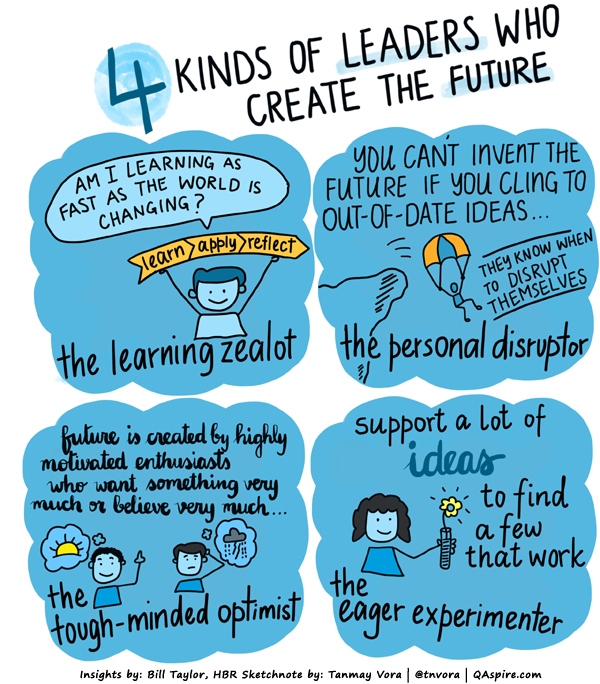
I found a great sketchnote today that highlights 4 kinds of leaders that create the future (full credit to Tanmay Vora for the sketchnote)

Of these, I’m definitely identifying the most with the learning zealot. There’s a full post outlining these here on HBR.

Strong leaders

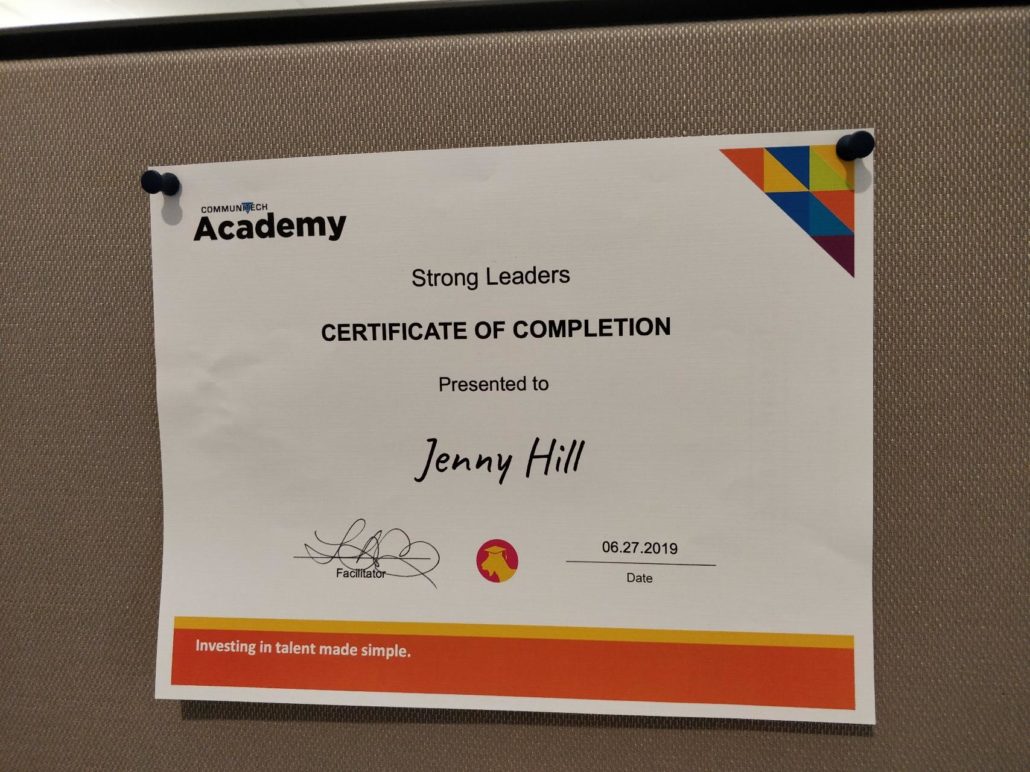
This month, I finished a 10-month-long leadership development program offered by Communitech called Strong Leaders. As a learning and development professional who works on leadership development programs, it was awesome to be a participant in the program.

There was a built-in coaching component which I found super valuable, and it was a great way to build connections with other leaders in the community.

The pacing was incredibly useful as well- the every-three-weeks cadence of the face-to-face sessions made it easy to take the time to process and recall each new concept or approach we learned.

Overall I found it really valuable and use things I learned from it every day!

Certificate!

Next in my development- I’m starting a masters program in the fall! Super excited about that.

5 small things that can make you look out-of-touch

As a business leader, your credibility is tied to your connectedness to the needs of your customer, team, and organisation. In everything you do, it’s critical to keep this in mind, and to ensure that both you and your team are focused on the most important work to advance your goals.

However, most leaders have times where they do or say things that are out-of-step with the world around them, and these things send messages that you may not want to send! Keep an eye on these things to make sure you’ve got your finger on the pulse and eyes on the horizon.

1. Disconnect from current technology and how your customers and workforce use it

If you’re using out-of-date technology, it’s a dead giveaway that you’re not in touch with the times. If you need to use certain applications or hardware due to your work, it’s important to acknowledge that so that your teams and customers don’t assume it’s because you just can’t be bothered to keep up. Keep your fax machine at home and join the video conference instead.

2. Lack of awareness of your team’s people challenges

Your team has some major challenges with people- all teams do. Whether the challenges are within the team or elsewhere, it’s something that has the potential to suck up a lot of employee time and energy that could be better spent on adding value for your customers. If you’re blissfully unaware of it, it will only get worse, not better. Make sure you’re aware and on top of these challenges, and work with your team to improve their interactions.

3. Disconnect from the day-to-day work your teams do

Nobody expects the leader of a team to be able to jump in and complete any task that their team is accountable for- but they must be aware of the process to complete it. When leaders aren’t familiar with the processes their teams work through every day, they can’t effectively remove roadblocks and elevate the capabilities of their members. Make sure you’re fully in touch with how the work gets done on your team and where the time goes, and if you’re not, spend some time in the trenches to get connected.

4. Lack of awareness of political climates and local issues that affect your customers’ lives

This is not just related to national politics, but also local issues. If your customers or team members are dealing with political challenges in their local government, labor union, school system, or other organization that affects their lives, it will have an impact on their behaviour. If you’re disconnected from this, it will create the impression that you’re not in touch with the environment that you work it and affect your credibility.

5. Public criticism of other teams or leaders

Public criticism can have a huge impact and create unnecessary anxiety among your team members. Modern leaders praise their teams and others publicly, and save their criticism for a more targeted audience.

All these things can add up to an image that you’re not the best advocate for your team or your customers. You can avoid these things by spending time on your own development, having frequent one-on-one meetings with your team members, and engaging in social learning. More tips to come in a future article- in the meantime, keep learning and stay connected so that you’re always in-touch!